
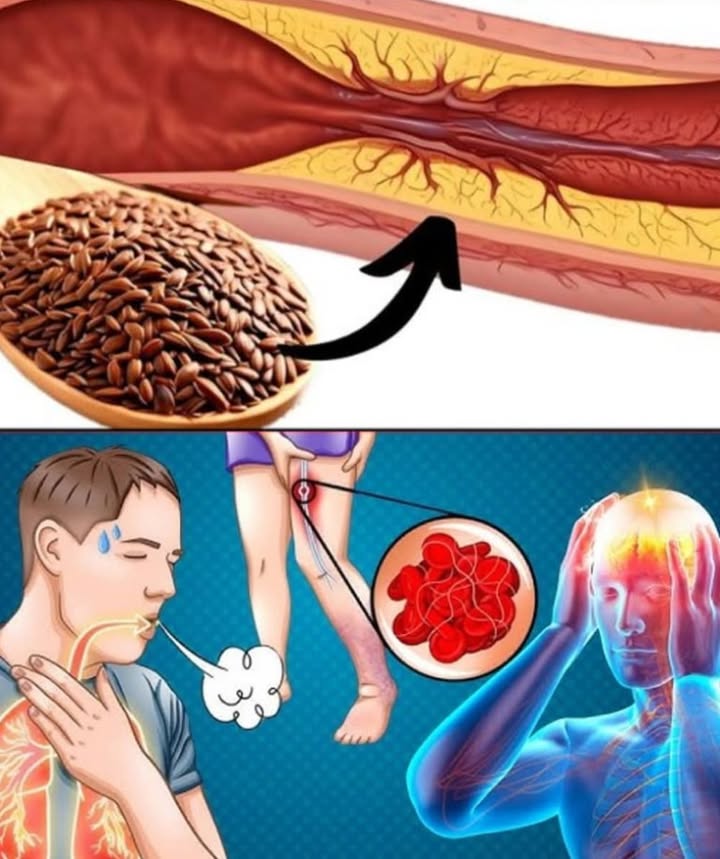
1 Tablespoon of Linseed a Day: A Natural Blend to Help Prevent Blood Clots, Stroke, and Heart Attack
🌿 What Is Linseed?
Linseed, also known as flaxseed, is a tiny seed packed with powerful nutrients. It’s one of the richest plant sources of:
- Omega-3 fatty acids (ALA) – anti-inflammatory and heart-protective
- Lignans – plant compounds with antioxidant and hormone-balancing effects
- Soluble fiber – helps control blood sugar and lower cholesterol
❤️ How Linseed Supports Heart and Circulatory Health
✅ 1. Prevents Blood Clots
- The omega-3s in linseed help make blood less sticky, reducing the risk of clot formation (thrombosis).
- This is especially important for people at risk of deep vein thrombosis (DVT) or cardiovascular events.
✅ 2. Reduces Risk of Stroke
- Linseed can help lower blood pressure and improve artery elasticity, reducing the chance of a stroke.
- It also helps manage cholesterol and inflammation, which are major stroke risk factors.
✅ 3. Protects Against Heart Attacks
- Regular intake helps:
- Lower LDL (bad) cholesterol
- Raise HDL (good) cholesterol
- Reduce triglycerides
- Improve overall blood flow
🧴 How to Use Linseed for Best Results
🥄 Recommended Daily Dose:
- 1 tablespoon (about 10g) per day of ground flaxseed (linseed).
Note: Always grind linseed before consuming it — whole seeds may pass through your digestive system undigested, meaning your body won’t absorb the nutrients.
⏰ When to Take It:
- Morning is ideal — mix into breakfast for the best absorption.
- Can also be taken before meals to help control appetite and stabilize blood sugar.
🍽️ Ways to Take Linseed Daily:
1. Add to Smoothies
Mix 1 tablespoon of ground linseed into your morning smoothie.
2. Sprinkle on Oatmeal or Yogurt
Boost your breakfast with a spoonful of linseed for extra fiber and healthy fats.